Keeping up with a Family Tradition
By Misha
I had the pleasure to speak with two Italian families
this summer, both of whom have been returning to Hi-London for 5 years and
counting. Family traditions form the foundation of Italian culture, and it
seems Hi-London has become a tradition for these two families.
Of course, we have families coming from many countries
around the world, year after year. This year, I taught students from Poland, Russia,
Slovakia, Brazil, Argentina, China, Japan, Germany, Switzerland, France,
Belgium, Saudi Arabia, and many more. Especially
during the summer, well over half of our students were returning for the second,
third, fourth or more time. That made for a very rich, international mix! And
some would describe us as a family. Such deep relationships were built, with the
group moving as one happy organism – together – by the end of the week.
 I asked Bruna, the Italian grandmother of two boys and
one girl, what had brought her family to return to Hi-London for so many years.
She said that she and her grandchildren so appreciated this setting of international
exchange. At an impressionable age, children from all over the world are
brought together to study English, but invariably they learn so much more. They
are introduced to other cultures, and so they quickly grow to accept diversity.
They learn to seek it, respect it, and be inspired by it.
I asked Bruna, the Italian grandmother of two boys and
one girl, what had brought her family to return to Hi-London for so many years.
She said that she and her grandchildren so appreciated this setting of international
exchange. At an impressionable age, children from all over the world are
brought together to study English, but invariably they learn so much more. They
are introduced to other cultures, and so they quickly grow to accept diversity.
They learn to seek it, respect it, and be inspired by it.
I talked to Lara, the mother of Emma, who has been a part
of Hi-London since she was 9 years old. Emma is now 13 and started the Teen
Programme last year. She plans to be
with us for another 4 years (!) Lara loves many aspects of our school. In the
first year, she said she noticed Emma’s progress right away, and she has come
to rely on our reports (given to the students who are with us for two weeks or
more to track Emma’s growth over the years.
Our teachers give individual attention to each student,
and if a student can stay for longer, there is great benefit. It allows us to
monitor individual abilities in greater depth and to deliver the tuition and
homework aligned to individual need. Also, we are better able to give
suggestions at the end of the chosen term so that the student can continue to
develop through the year until they return the following season.
 There are other unique aspects that keep our families coming
back to Hi-London, such as the variety of excursions and language immersion
opportunities. Each week, the children and teens travel out into London to
explore this great city through the lens of a theme base. We know how to engage
our students with the exhibits and material in over 80 venues, museums, and
sites across the city. And students sure do love to travel on London’s transport
system, whether it be the Tube, bus, boat or train!
There are other unique aspects that keep our families coming
back to Hi-London, such as the variety of excursions and language immersion
opportunities. Each week, the children and teens travel out into London to
explore this great city through the lens of a theme base. We know how to engage
our students with the exhibits and material in over 80 venues, museums, and
sites across the city. And students sure do love to travel on London’s transport
system, whether it be the Tube, bus, boat or train!
Underlying everything is the pulse of new friendships and
the family-like vibrations that are built, encouraged and fostered. Of course,
the young students have to communicate in English to build these new ties with others.
This is such a beautiful motivator to witness! Even though the students may sometimes
share a native tongue, more often than not, most of the group will be from different
countries. So, this becomes a very different context from an English class back
home.
And, at the end of it all, we send photos from each
fun-filled week so that the parents and students have a visual diary. For sure,
Hi-London becomes like family, like home, and for many – a lasting tradition.


 Hello. I’m 15, and I did a one-week course with Hi-London to improve my English and my
writing. I also visited a lot of places in London, which I really enjoyed
because I love London culturally speaking - it’s such an interesting city.
Hello. I’m 15, and I did a one-week course with Hi-London to improve my English and my
writing. I also visited a lot of places in London, which I really enjoyed
because I love London culturally speaking - it’s such an interesting city.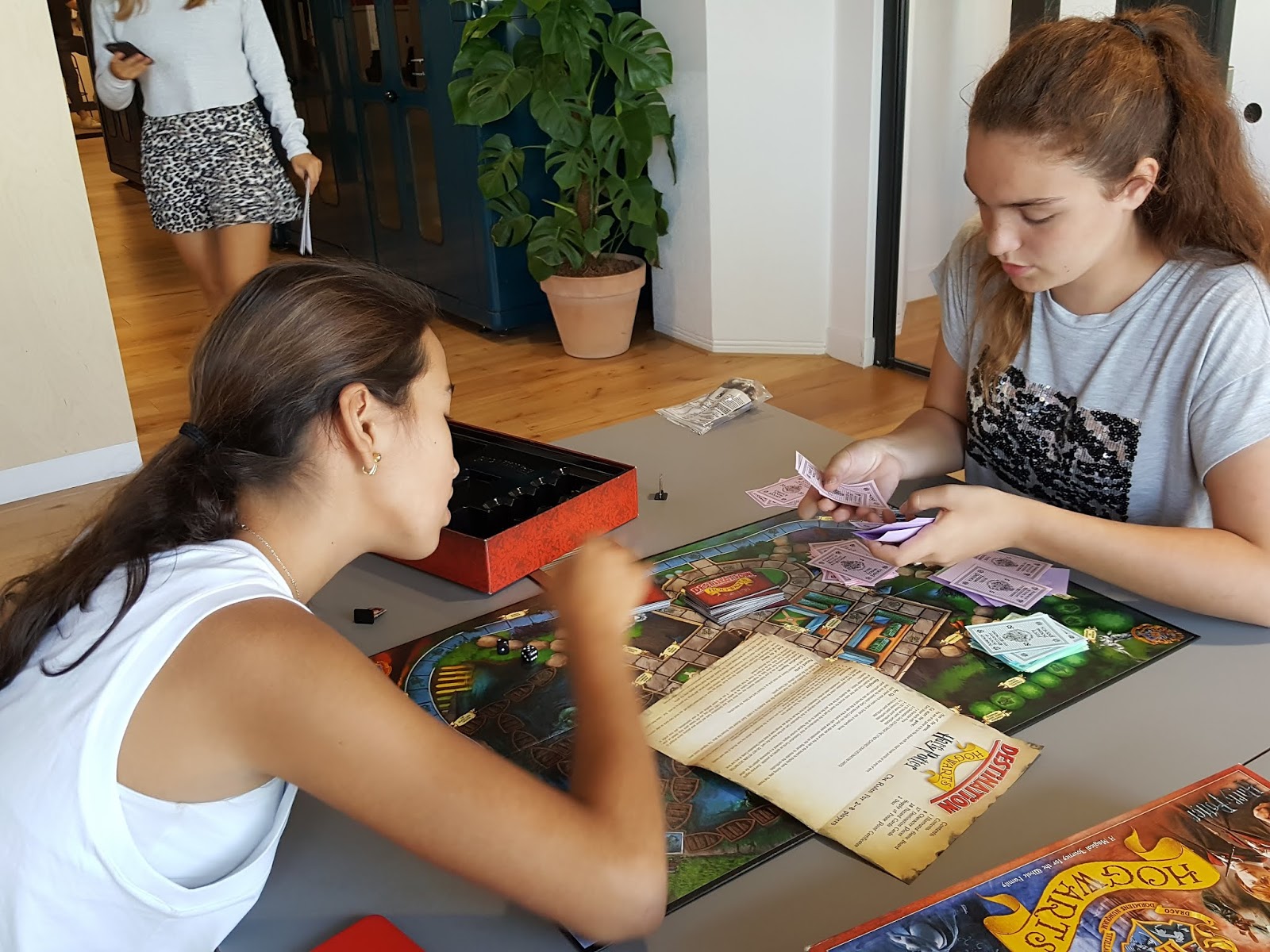
 I asked Bruna, the Italian grandmother of two boys and
one girl, what had brought her family to return to Hi-London for so many years.
She said that she and her grandchildren so appreciated this setting of international
exchange. At an impressionable age, children from all over the world are
brought together to study English, but invariably they learn so much more. They
are introduced to other cultures, and so they quickly grow to accept diversity.
They learn to seek it, respect it, and be inspired by it.
I asked Bruna, the Italian grandmother of two boys and
one girl, what had brought her family to return to Hi-London for so many years.
She said that she and her grandchildren so appreciated this setting of international
exchange. At an impressionable age, children from all over the world are
brought together to study English, but invariably they learn so much more. They
are introduced to other cultures, and so they quickly grow to accept diversity.
They learn to seek it, respect it, and be inspired by it. There are other unique aspects that keep our families coming
back to Hi-London, such as the variety of excursions and language immersion
opportunities. Each week, the children and teens travel out into London to
explore this great city through the lens of a theme base. We know how to engage
our students with the exhibits and material in over 80 venues, museums, and
sites across the city. And students sure do love to travel on London’s transport
system, whether it be the Tube, bus, boat or train!
There are other unique aspects that keep our families coming
back to Hi-London, such as the variety of excursions and language immersion
opportunities. Each week, the children and teens travel out into London to
explore this great city through the lens of a theme base. We know how to engage
our students with the exhibits and material in over 80 venues, museums, and
sites across the city. And students sure do love to travel on London’s transport
system, whether it be the Tube, bus, boat or train!  For 20 years I have been working in theatre and the
performing arts. It never ceases to amaze me how bodily expression and play inspires
growth and change. To play, to tell stories, to enact characters, and to expand
vocal and physical range is to explore and expand who we are.
For 20 years I have been working in theatre and the
performing arts. It never ceases to amaze me how bodily expression and play inspires
growth and change. To play, to tell stories, to enact characters, and to expand
vocal and physical range is to explore and expand who we are. The ability to listen, to focus, and to express are
key to learning language. In children, progress can be made quickly if they can
be stimulated to take a risk. Play and storytelling are great ways to help
children feel at ease. Even before they can formulate or understand words,
gesture can be used to cross the boundaries of difference and culture. Gesture
can communicate even before words are spoken, and once the children feel safe
within the community of a group, they are much more likely to grow. Playing
games, drawing and storytelling are excellent methods to build foundations for
new skills in communication of a new language, and Hi-London provides the incredible
cultural backdrop of one of the greatest cities of the world. There are so many
contexts and themes to draw from. Each of our week-long courses are theme-based
around a topic which helps the students to stay focused and to create meaningful
memory and experience.
The ability to listen, to focus, and to express are
key to learning language. In children, progress can be made quickly if they can
be stimulated to take a risk. Play and storytelling are great ways to help
children feel at ease. Even before they can formulate or understand words,
gesture can be used to cross the boundaries of difference and culture. Gesture
can communicate even before words are spoken, and once the children feel safe
within the community of a group, they are much more likely to grow. Playing
games, drawing and storytelling are excellent methods to build foundations for
new skills in communication of a new language, and Hi-London provides the incredible
cultural backdrop of one of the greatest cities of the world. There are so many
contexts and themes to draw from. Each of our week-long courses are theme-based
around a topic which helps the students to stay focused and to create meaningful
memory and experience. When taking a first look at London coming
from Germany, there aren’t too many differences to Berlin one is able to
realize. People are busily walking around, the traffic is bad, tourists are
blocking the footpaths all over the place, and the whole atmosphere is nothing
else but hectic. Those are characteristics that London and Berlin share, but
when you take a second, closer look at
London, there are more differences than one would have thought in the
beginning.
When taking a first look at London coming
from Germany, there aren’t too many differences to Berlin one is able to
realize. People are busily walking around, the traffic is bad, tourists are
blocking the footpaths all over the place, and the whole atmosphere is nothing
else but hectic. Those are characteristics that London and Berlin share, but
when you take a second, closer look at
London, there are more differences than one would have thought in the
beginning.  Do you know the River Thames and Lake Van?
They are located in different countries, and one of them is a river and the
other one is a lake. I will give more details about them and compare them to
each other. What are we waiting for? Let’s
learn more about them.
Do you know the River Thames and Lake Van?
They are located in different countries, and one of them is a river and the
other one is a lake. I will give more details about them and compare them to
each other. What are we waiting for? Let’s
learn more about them. First, we spoke to Daniela from Milano Bergamo, mother of two girls. For the past three years, she’s trusted Hi-London for her children’s summer education. At Hi-London, the girls always seem to be in a great mood, eager to learn and looking forward to the next activities, whether it is games or a museum workshop. Daniela believes in what we do and in our method of teaching as her children’s English skills keep improving as the days pass. Her feedback was nothing but positive as she explained why Hi-London will still be a popular choice for the children’s future summers.
 We also spoke to Nicole, a bright twelve-year-old student from Milan who has been coming to Hi-London for the past two years. After trying out different summer schools throughout the city, she’s concluded that Hi-London suits her best. What she appreciates most is our way of teaching. When discussing this with her, she mentioned how the grammar taught at school was very rarely put into practise, making the language hard to relate to. Hi-London gave her the chance to fully grasp what she had been taught previously, as conversations flowed throughout the week. Not only does she love the activities, her favourite being the workshops in the Natural History Museum, but so does her aunt, who lives in London and acts as Nicole’s guardian during her stay. Her aunt mentioned that our programmes are well suited to her niece’s needs and ensures a fun time. Nicole always values the friendships she makes during her time with us, and this too is a big part of her Hi-London experience.
